
Albino Common Snapping Turtle Care Guide: Habitat, Diet, Tank Setup & Expert Tips
Introduction
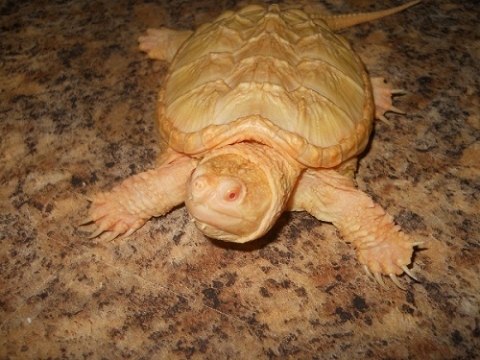
The Albino Common Snapping Turtle is one of the most striking and powerful freshwater turtles in the reptile hobby. Known for its pale coloration, large head, strong jaws, and prehistoric appearance, this rare morph of the common snapping turtle is both fascinating and demanding to care for.
At thetortoisenturtlesource.com, we provide reliable reptile care guides to help beginners and experienced keepers understand proper husbandry practices. In this complete article, you will learn everything about habitat setup, feeding, behavior, tank requirements, safety, and long-term care.
Because of its size and strength, the Albino Common Snapping Turtle is not a beginner-friendly species. It requires large enclosures, strong filtration, and careful handling practices to ensure safety and health.
What Is an Albino Common Snapping Turtle?
The Albino Common Snapping Turtle is a color mutation of the common snapping turtle (Chelydra serpentina). Unlike the normal dark-colored version, albino individuals have reduced pigmentation, giving them a yellowish-white appearance with pink or red eyes.
This genetic variation makes them highly sought after in the reptile hobby, but it does not change their natural behavior or strength. They remain aggressive, powerful, and highly defensive when threatened.
Even though they look unique, their care requirements are identical to standard snapping turtles, with a strong focus on safety and proper housing.
Natural Habitat and Behavior in the Wild
In the wild, snapping turtles are found in ponds, lakes, rivers, marshes, and slow-moving freshwater systems across North America. They prefer muddy bottoms with abundant vegetation and hiding spots.
They are mostly aquatic but spend significant time buried in mud or hiding underwater waiting for prey. They are ambush predators and rely on strong jaws and quick strikes to capture food.
Their natural diet includes fish, amphibians, insects, carrion, and aquatic plants. Understanding this behavior is important for recreating a proper captive environment.
Enclosure Setup and Tank Requirements
Proper housing is extremely important due to the size and strength of this species.
Tank Size
Juveniles can start in a 75–100 gallon tank, but adults require 200 gallons or more. Many keepers eventually transition them to large outdoor ponds for long-term housing.
Space is critical because lack of room can lead to stress and aggression.
Water Depth and Filtration
Deep water is necessary for swimming, but access to shallow areas is also important. The turtle should always be able to surface easily.
A heavy-duty filtration system is required because snapping turtles produce a large amount of waste. Water quality must be maintained consistently.
Basking Area
Although they do not bask frequently, a dry area with a heat source should still be provided. This helps regulate body temperature and supports shell health.
UVB Lighting
UVB lighting is recommended, especially for juveniles kept indoors. It supports calcium metabolism and overall health, although adults may spend less time basking.
Substrate and Decorations
Soft sand or muddy substrate works best. Many keepers also use bare-bottom tanks for easier cleaning.
Driftwood, rocks, and hiding areas should be provided, but must be securely placed due to the turtle’s strength.
Behavior and Temperament
The Albino Common Snapping Turtle is highly defensive and should always be treated with caution. It is not a handling-friendly pet.
It is an ambush predator that spends most of its time resting at the bottom of the tank or buried in substrate. It may strike quickly when food or perceived threats are nearby.
Unlike many other turtles, it is not social and should always be kept alone.
Feeding and Diet Plan
This species is an opportunistic carnivore with a very strong feeding response.
Protein Sources
- Fish (fresh or frozen/thawed)
- Earthworms
- Crayfish
- Insects
- Commercial carnivorous turtle pellets
- Occasional lean meats (in moderation)
Feeding Behavior
They often feed aggressively and may mistake movement for food. Feeding should always be done carefully using tongs or designated feeding areas.
Feeding Schedule
- Juveniles: every 1–2 days
- Adults: 2–3 times per week
Overfeeding should be avoided to maintain water quality and prevent obesity.
Health and Common Problems
Proper care and safety precautions are essential for this species.
Common Health Issues
- Shell infections from dirty water
- Respiratory infections from poor temperature control
- Parasites from raw or contaminated food
- Injuries from sharp tank objects or improper handling
Prevention Tips
- Use strong filtration systems
- Maintain stable warm water
- Handle minimally or not at all
- Provide a clean feeding routine
- Avoid overcrowding
Good water quality is the most important factor in preventing disease.
Growth and Lifespan
With proper care, snapping turtles can live for several decades. Growth rate depends on diet, temperature, and enclosure size.
Juveniles grow quickly when fed protein-rich diets, while adults grow more slowly but require significantly more space.
A stable and spacious environment is essential for long-term success.
Safety Considerations
Because of their powerful bite, safety is extremely important.
- Never handle unnecessarily
- Use tools or tongs during feeding
- Avoid placing hands near the head
- Secure tank lids due to strength and climbing ability
This species should always be respected as a powerful animal, not a traditional pet.
Tank Mates and Compatibility
The Albino Common Snapping Turtle should always be kept alone. It is highly aggressive toward other turtles and animals.
Even similarly sized turtles are at risk of injury or death if housed together.
Solitary housing is mandatory.
Breeding Overview
Breeding in captivity is possible but should only be attempted by experienced keepers. It requires large outdoor setups, proper nesting areas, and careful management.
Females lay eggs in sandy soil near water. Incubation conditions must be carefully controlled for successful hatching.
Due to size and aggression, breeding is not recommended for beginners.
Expert Care Tips
Here are professional recommendations:
- Always provide large aquatic space
- Use industrial-grade filtration systems
- Avoid all unnecessary handling
- Feed carefully using tongs
- Maintain stable water temperatures
- Keep enclosure secure and escape-proof
These steps are essential for safe and successful care.
Why This Turtle Is Unique
The Albino Common Snapping Turtle is highly valued because it is:
- Rare and visually striking
- Extremely powerful and prehistoric-looking
- Long-lived and hardy
- Highly interesting to observe
- One of the most iconic freshwater turtles
It is best suited for advanced reptile keepers only.
Final Thoughts
The Albino Common Snapping Turtle is a powerful and fascinating reptile that requires serious commitment, proper housing, and careful handling practices. While its appearance is unique and attractive, its strength and temperament demand respect and experience.
With proper care, large space, and excellent water quality, it can thrive for decades in captivity.
At thetortoisenturtlesource.com, we encourage responsible reptile keeping and proper husbandry practices to ensure every turtle is cared for safely and correctly.


Reviews
There are no reviews yet.